
This post may contain affiliate links.
Skip the additives with this easy homemade mayonnaise recipe that only takes a few minutes!
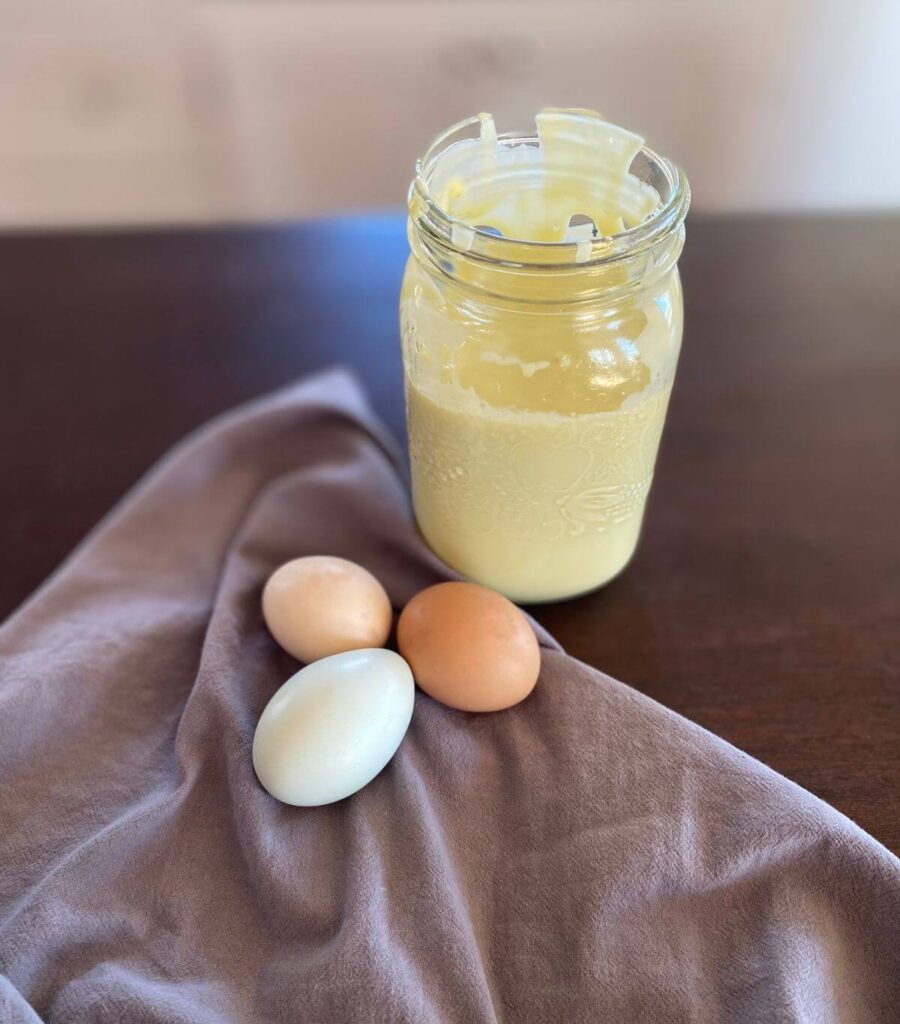
I don’t know about you, but we are a mayo family ALL the way. It is a condiment we use with almost everything; in fact, my husband even puts it on his eggs, ha.
Needless to say, we go through a ton of mayo in our home. This means I needed to stop buying it and start making it. Good thing it’s so easy!
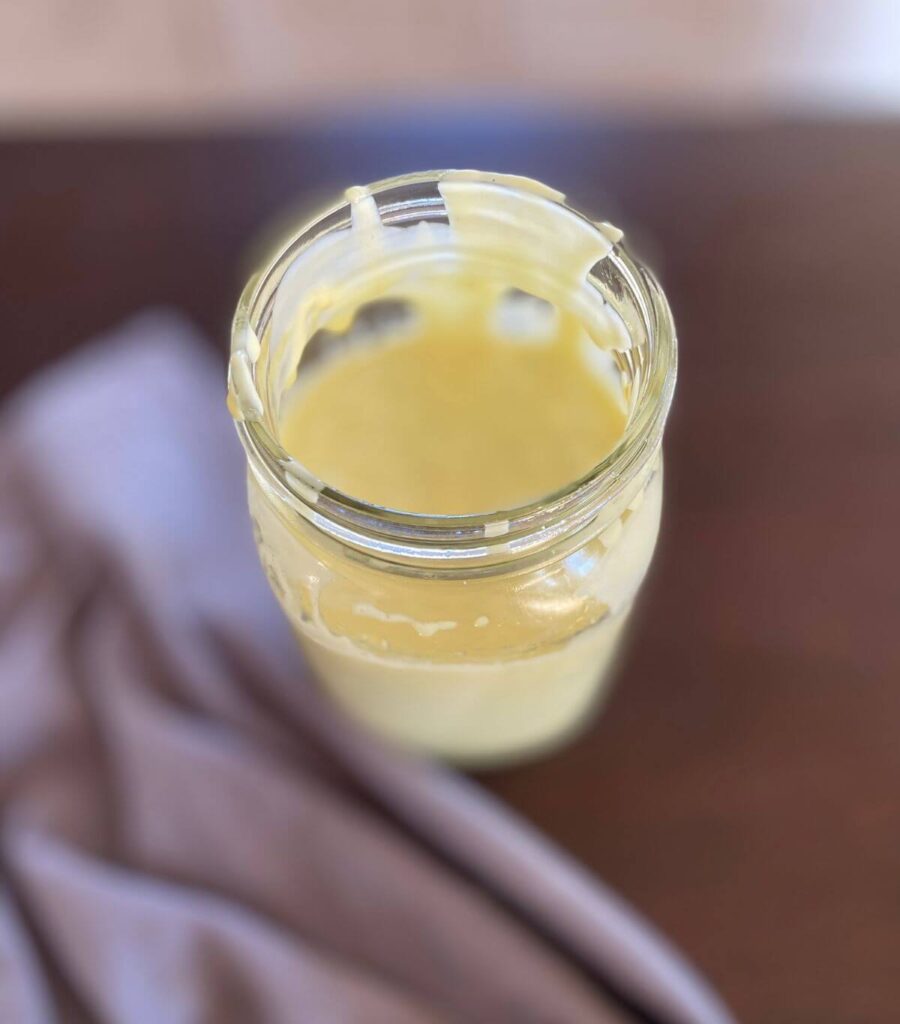
Why homemade mayonnaise?
Money Savings
How much does a jar of mayo cost at the store these days? Take the added cost of processing and shipping and compensate yourself for doing the work instead!
Once you establish a stocked pantry, you will likely always already have every ingredient you need for homemade mayo. This makes for no extra cost.
Health Benefits
Depending on the brand, store-bought mayo is usually made of processed ingredients such as seed oils and contains additives to maintain its shelf life.
Homemade mayonnaise is actually very nutritious since it is made of healthy fats and protein. Plus, you have full control over the ingredients, ensuring they are high-quality.
Kitchen Skills
I believe that making condiments (or any food for that matter) from scratch is a skill. Like any skill, it takes time to master. Not that the actual action is difficult, but your knowledge of ingredients, experience with flavours and timing, etc., and your mindset. It’s all about the mindset : )
It took time for me to get where I am now in the kitchen. I used to strategically plan out when and how to make the mayo, but now I can quickly whip up a batch while making dinner without looking at a recipe!
Use of Eggs
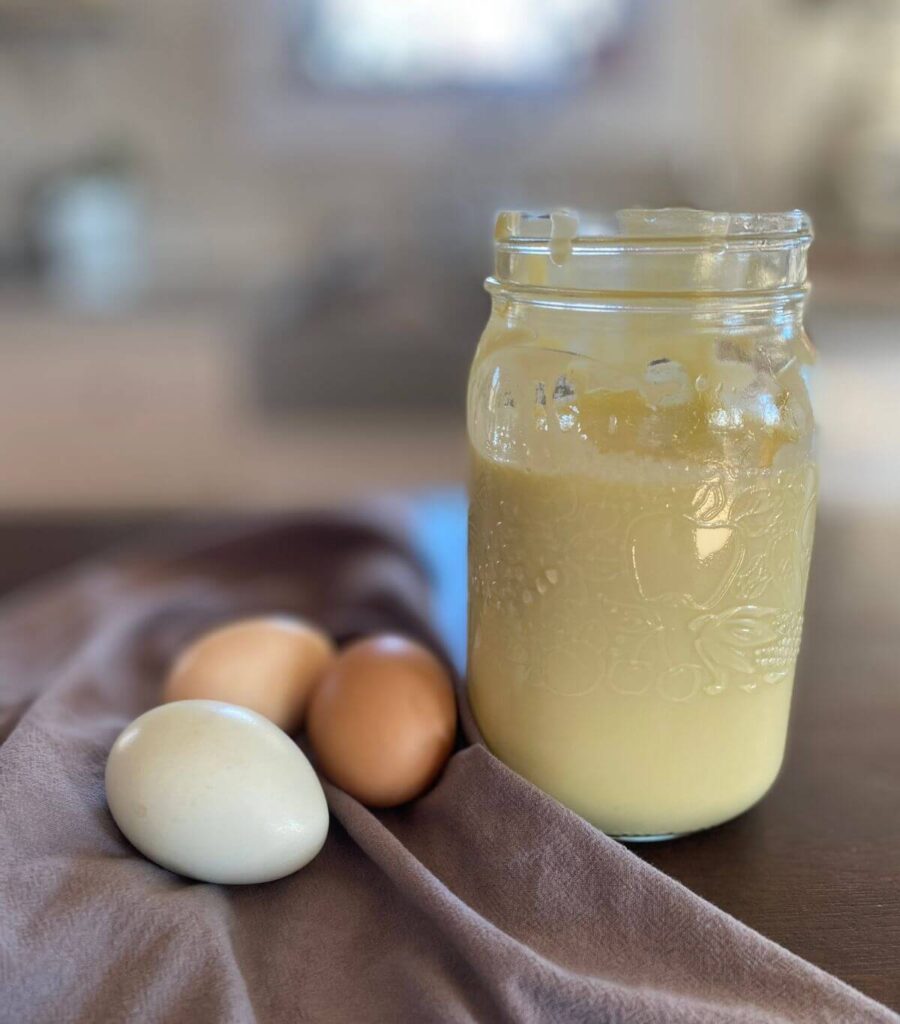
If you have chickens like I do, you are often looking for ways to use up your eggs. There are seasons where we get more eggs than we can keep up with, so a batch of homemade mayo is a go-to.
Equipment
- One large mason jar and its lid.
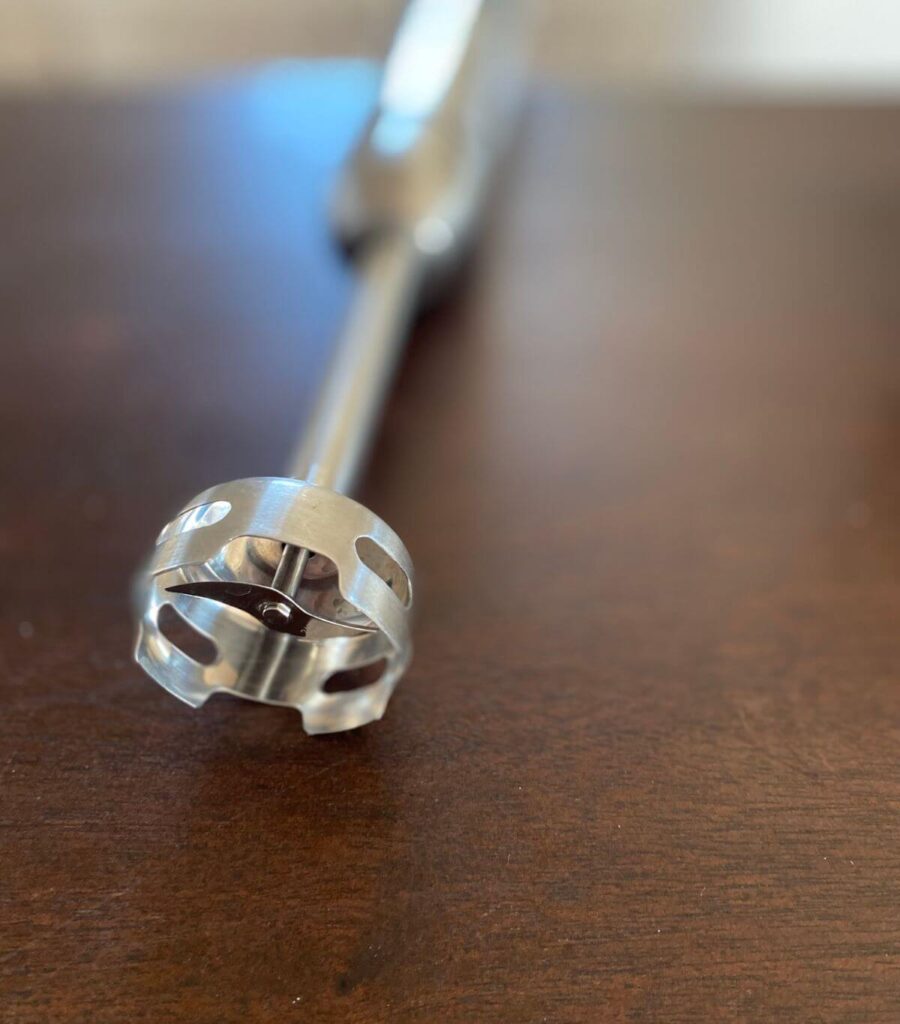
- Immersion blender equipped with the blade attachment. A blender or food processor can be used as well.
Ingredients
Eggs – Pasture-raised chicken eggs are best and can be found from a local farm store, health-food store or even some grocery stores. Free range chicken eggs are your next best bet. And if you want to be turbo healthy, duck eggs have even more nutrients than chicken eggs!
Oil – I use a combination of organic extra virgin olive oil and 100% pure avocado oil.
Apple Cider Vinegar – Be sure to buy the one with “the mother” (bacterial culture). White vinegar will get the job done but since apple cider vinegar can be used in countless recipes and home remedies, it’s worth having.
Mustard – Dijon mustard adds to the flavour, but regular mustard does the trick just fine.
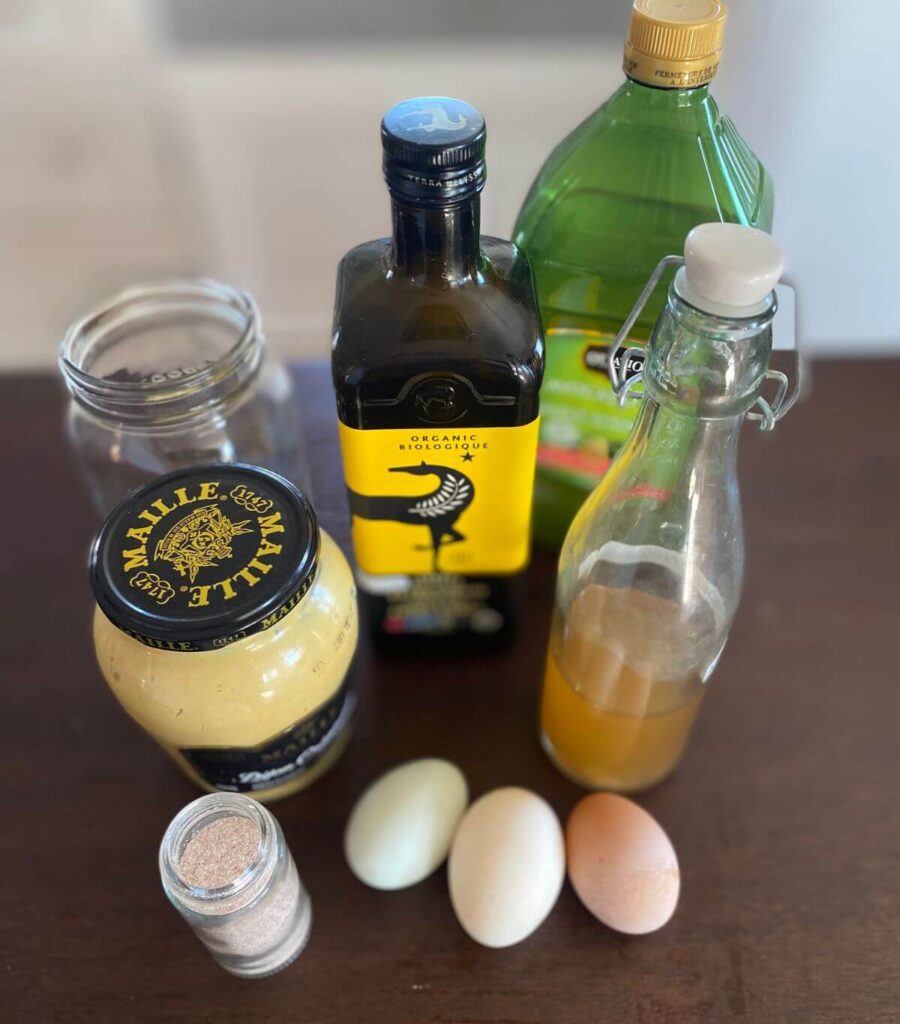
Salt – We use unprocessed sea salt.
Optionals:
Cane sugar – Sugar is optional. I don’t add it every time as it is not a requirement, however it can aid in preserving the mayo. Of course it also adds a little sweetness.
Lemon – Lemon juice can be used in place of or as well as apple cider vinegar.
How to make homemade mayonnaise
This recipe can be easily split in half or doubled.
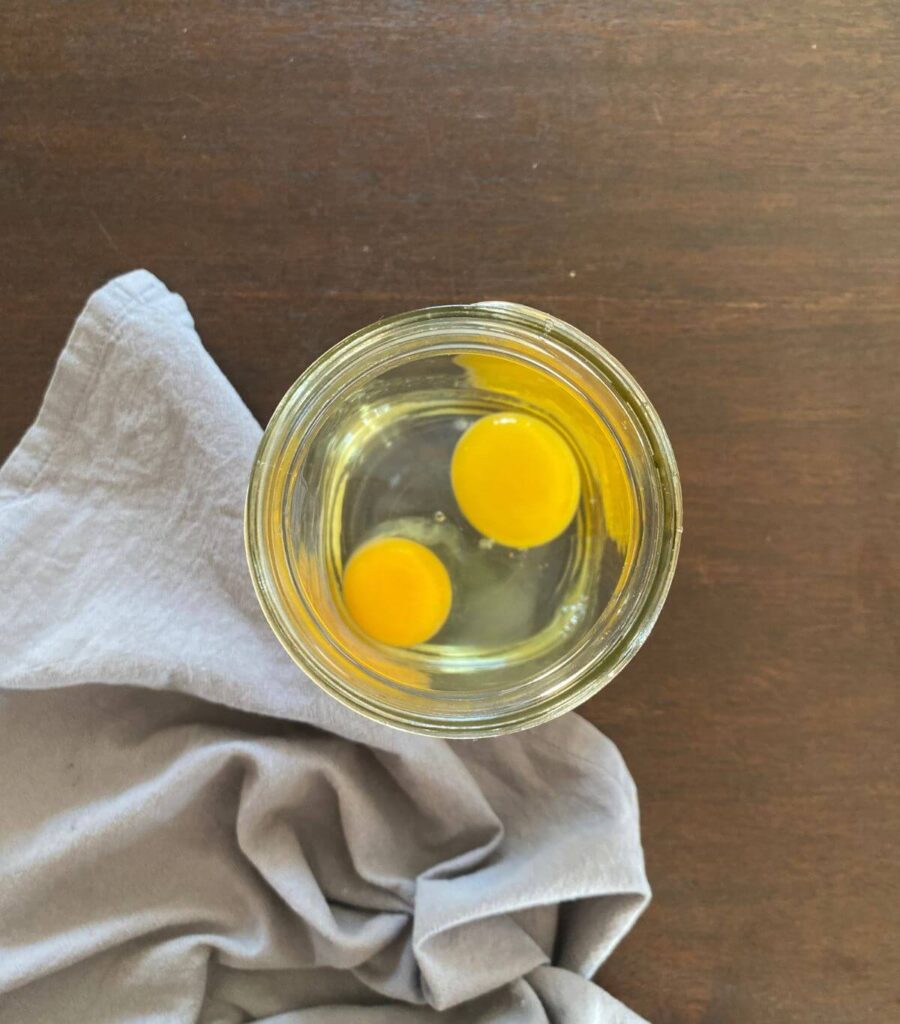
1. Gently crack 2 eggs into the jar you will be storing your homemade mayo in. Note: we want the eggs to stay intact, so I like to tilt the jar on an angle to prevent the yolks from bursting at the bottom.
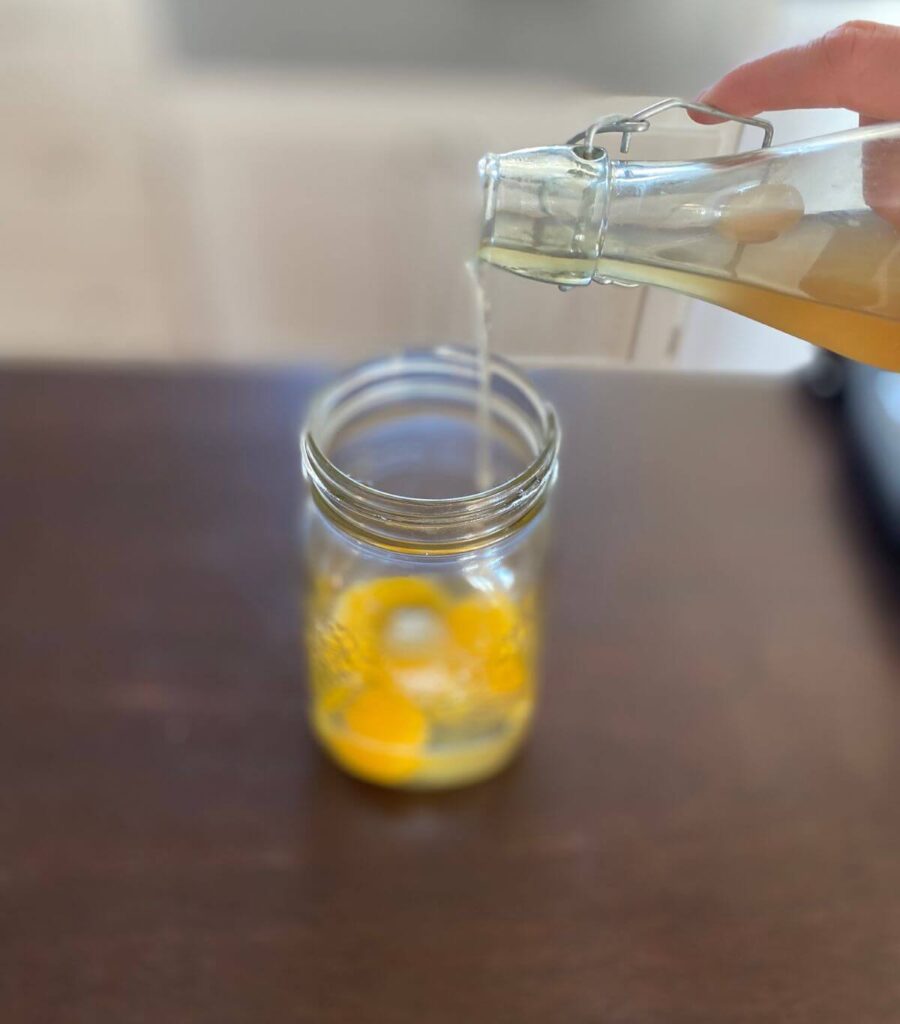
2. Add the apple cider vinegar, mustard, salt, sugar and oil to the jar.
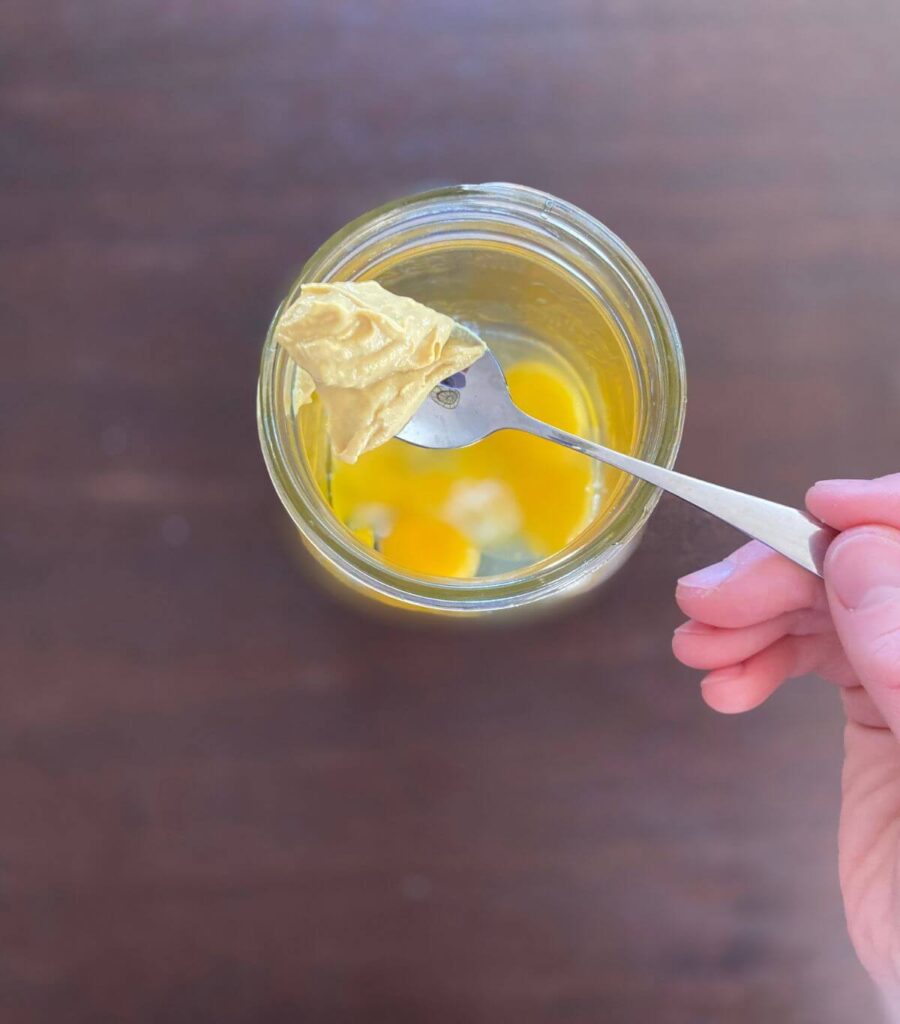
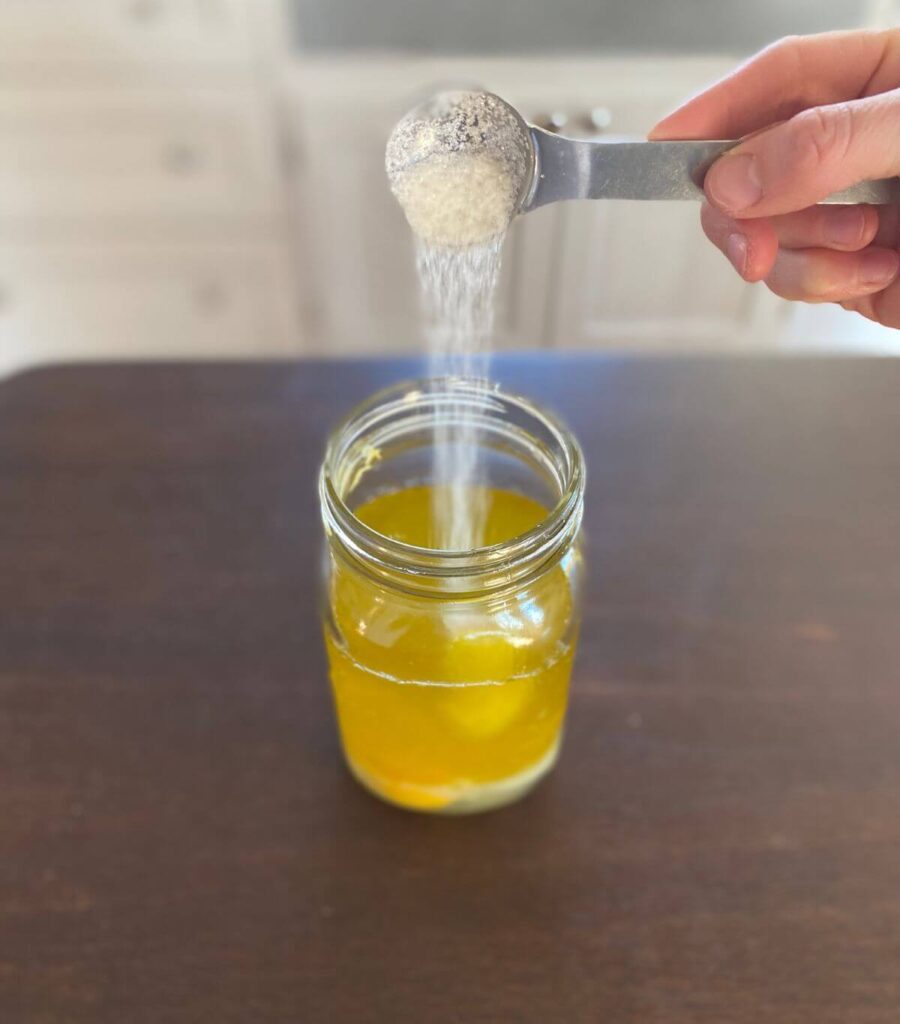
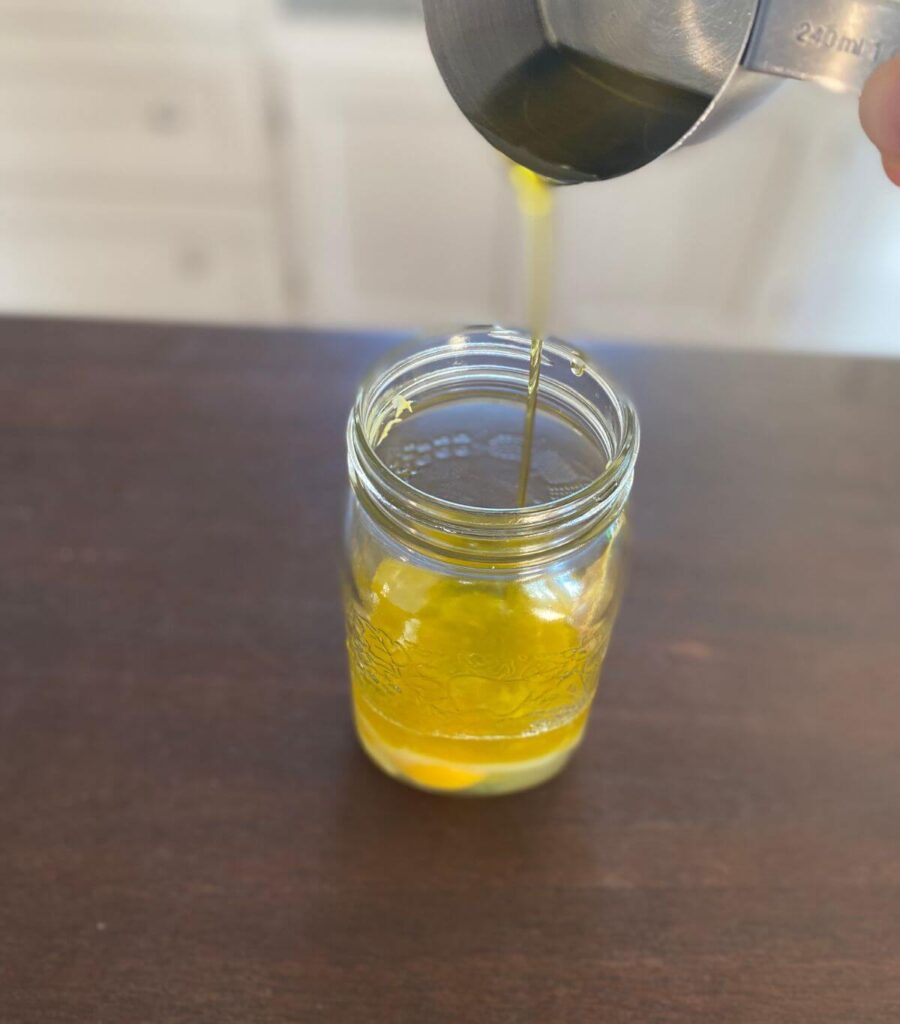
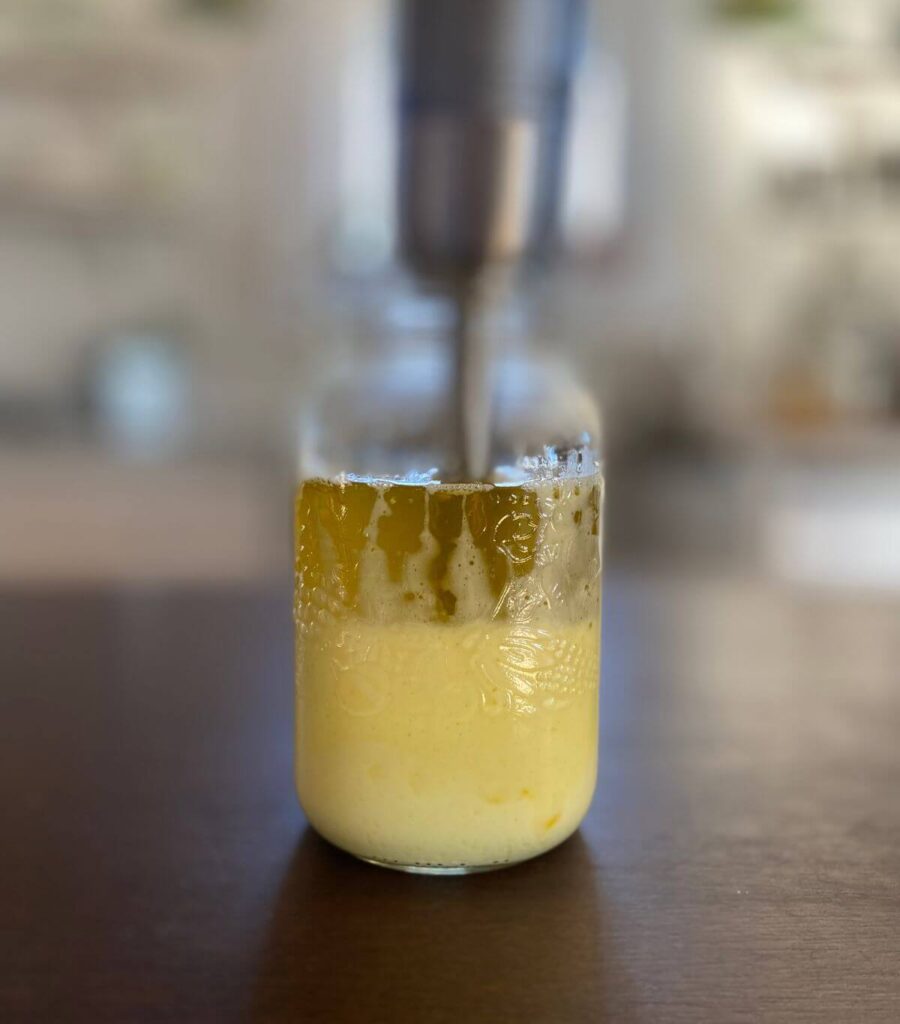
3. Place the immersion blender at the very bottom of the jar and blend on medium-high speed until the oils and liquids start to emulsify. Slowly raise the blender up until it is completely blended.
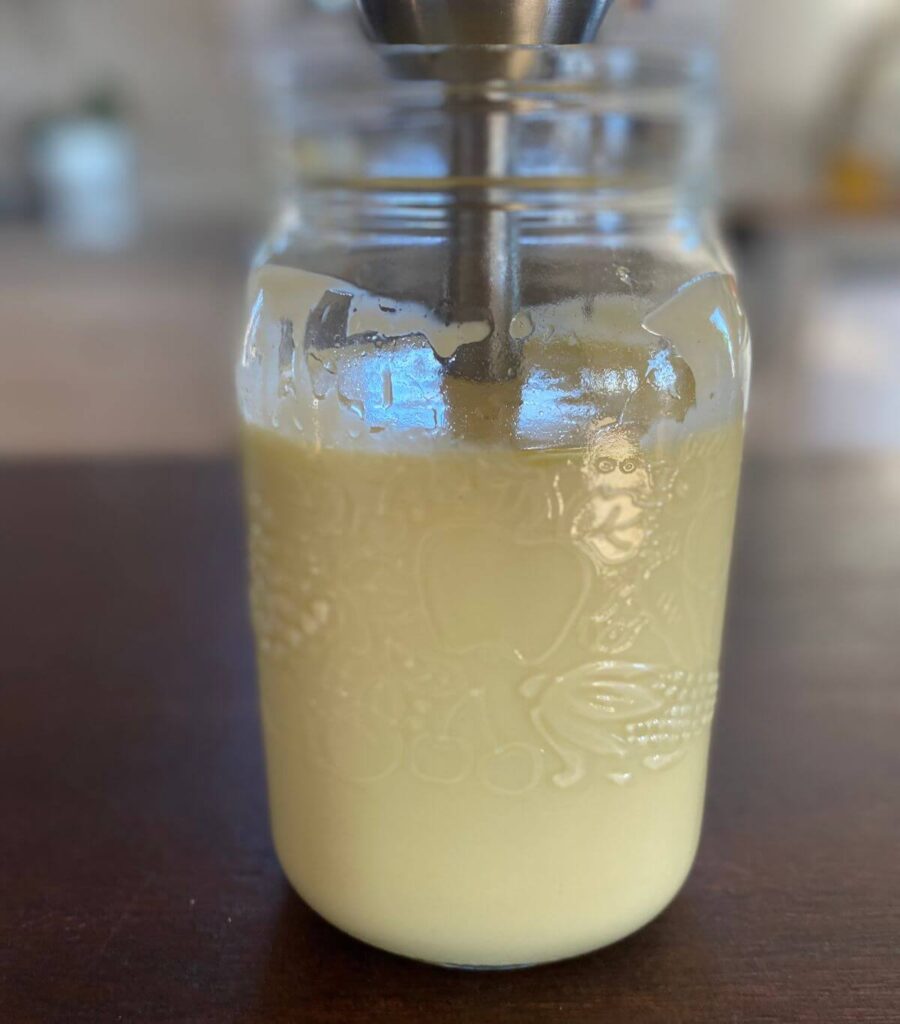
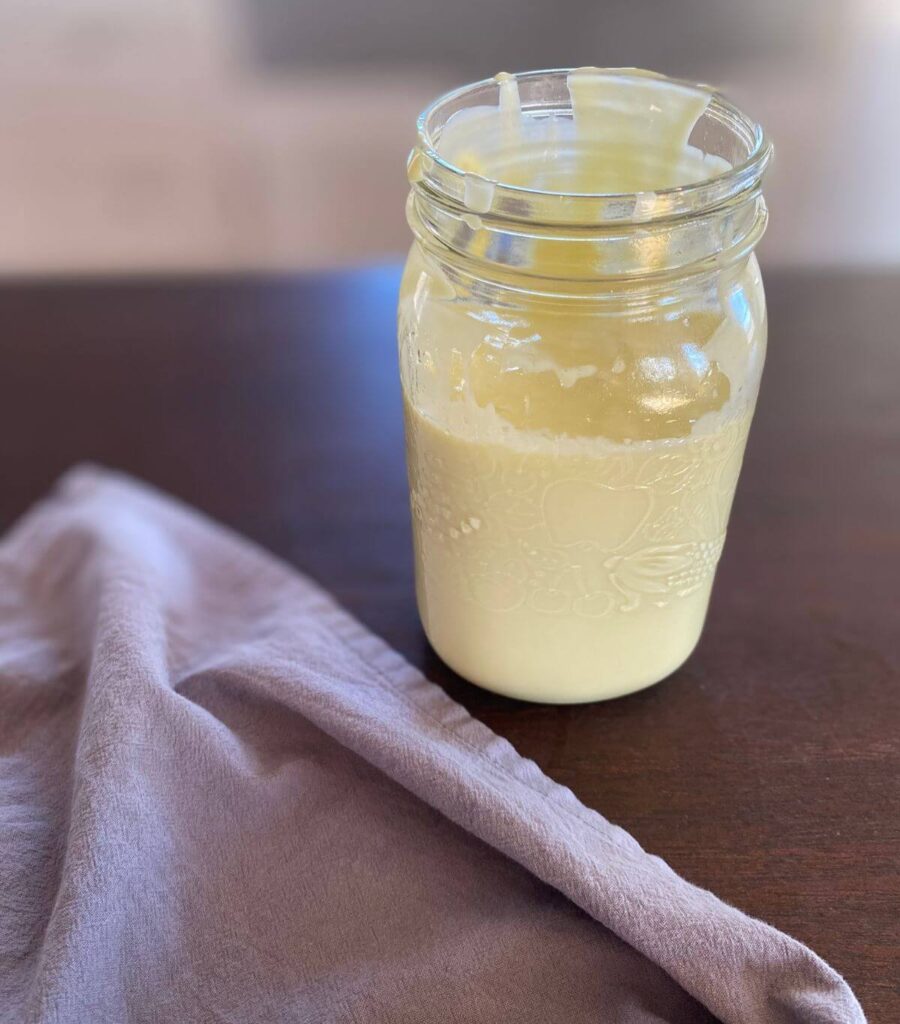
4. Salt or season to taste and close with a lid. Store in the fridge for about a week.
FAQs
How long is homemade mayonnaise good for?
Homemade mayo is usually good in the fridge for about a week. It depends how fresh your eggs are and how much salt and/or sugar you’ve added. If you are unsure, the smell test never lies ; )
Is homemade mayonnaise safe?
Homemade mayonnaise is as safe as you make it! Here are some helpful tips:
- Use fresh eggs. If you are very concerned, using pasteurized eggs could help lower the risk of contamination. I have also seen homemade mayo recipes using boiled eggs! Here’s one.
- Store your mayo in the fridge for up to a week.
- Make smaller batches at a time to ensure your mayo is eaten within a week.
*Fact: The acid (apple cider vinegar or lemon) lowers the pH, making your homemade mayo an inhospitable environment for bacteria.
Should I use whole eggs or only the yolk?
Here are some reasons for both options:
Whole Egg
- the whites help to stabilize the mixture, making the emulsification pretty much fail-proof
- less oil is required
- no leftover egg whites to deal with
- the whites give a milder flavour
Yolks Only
- using only the yolk gives the mayonnaise a richer flavour
- using only the yolk makes for more of a traditional mayo in both flavour and texture
Want a smaller grocery bill and bigger skillset? Try my homemade sauerkraut or homemade vegetable stock recipes.
There are so many ways to make mayonnaise at home. What’s yours?
Easy Homemade Mayonnaise Recipe
Equipment
- 1 large mason jar
- immersion blender with blade attachment
Ingredients
- 2 whole eggs
- 1/2 tsp apple cider vinegar OR 1 tbsp lemon juice
- 1/2 tsp dijon or regular mustard
- 1 tsp sea salt
- 3/4 cup olive oil – extra virgin
- 3/4 cup avocado oil – pure
- 1/2 tsp cane sugar – optional
- 1 tbsp juice of a lemon – optional or instead of ACV
Instructions
- Crack the eggs into your jar, tilting it to prevent the yolk from bursting.
- Add the apple cider vinegar, mustard, salt and oil to the jar. Cane sugar and lemon are optional.
- Set the immersion blender on the very bottom of the jar and blend on medium-high speed until fully emulsified.
- Salt or season to taste and store in the fridge for about a week.
Apple cider vinegar lowers the PH?! That’s cool! Science!👨🏼🔬